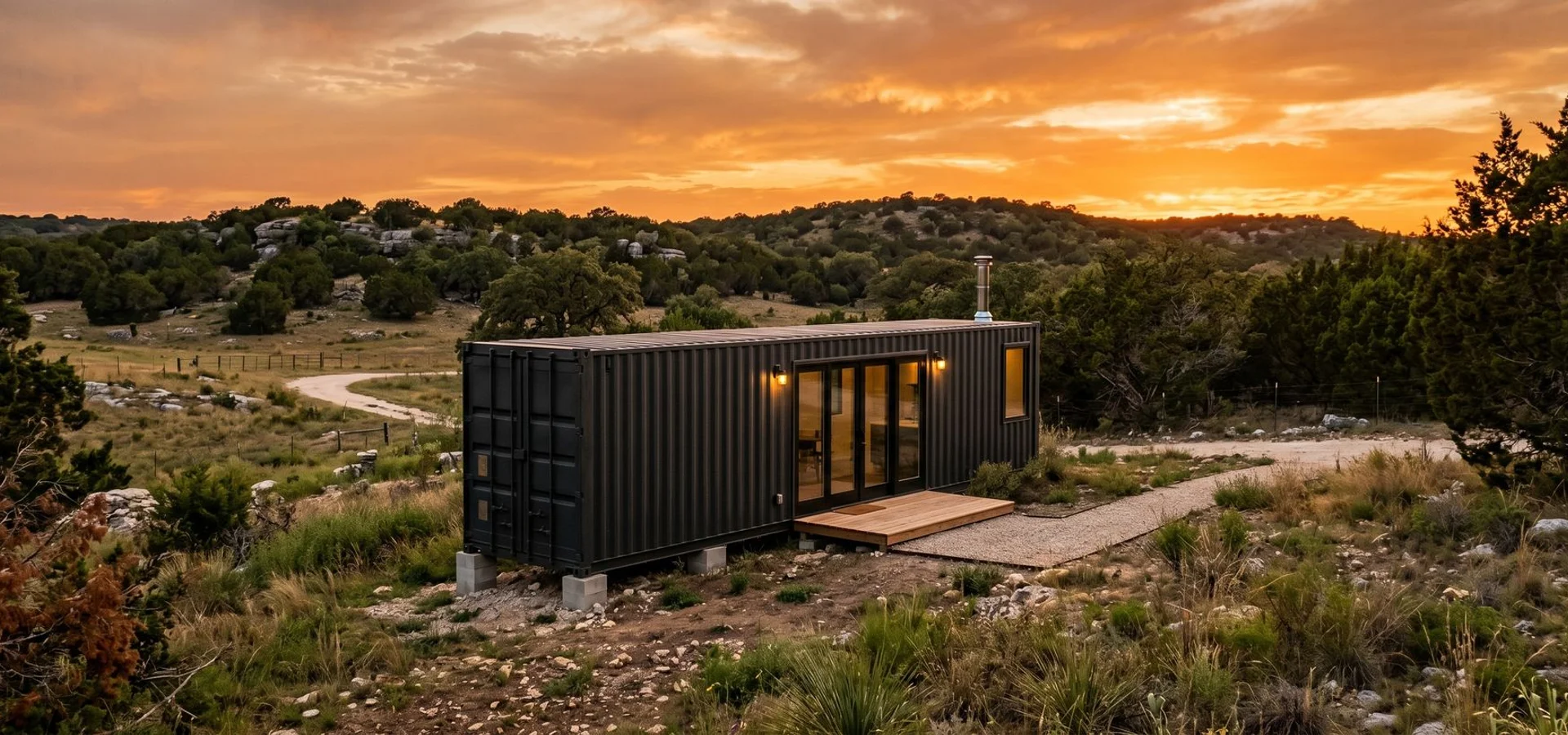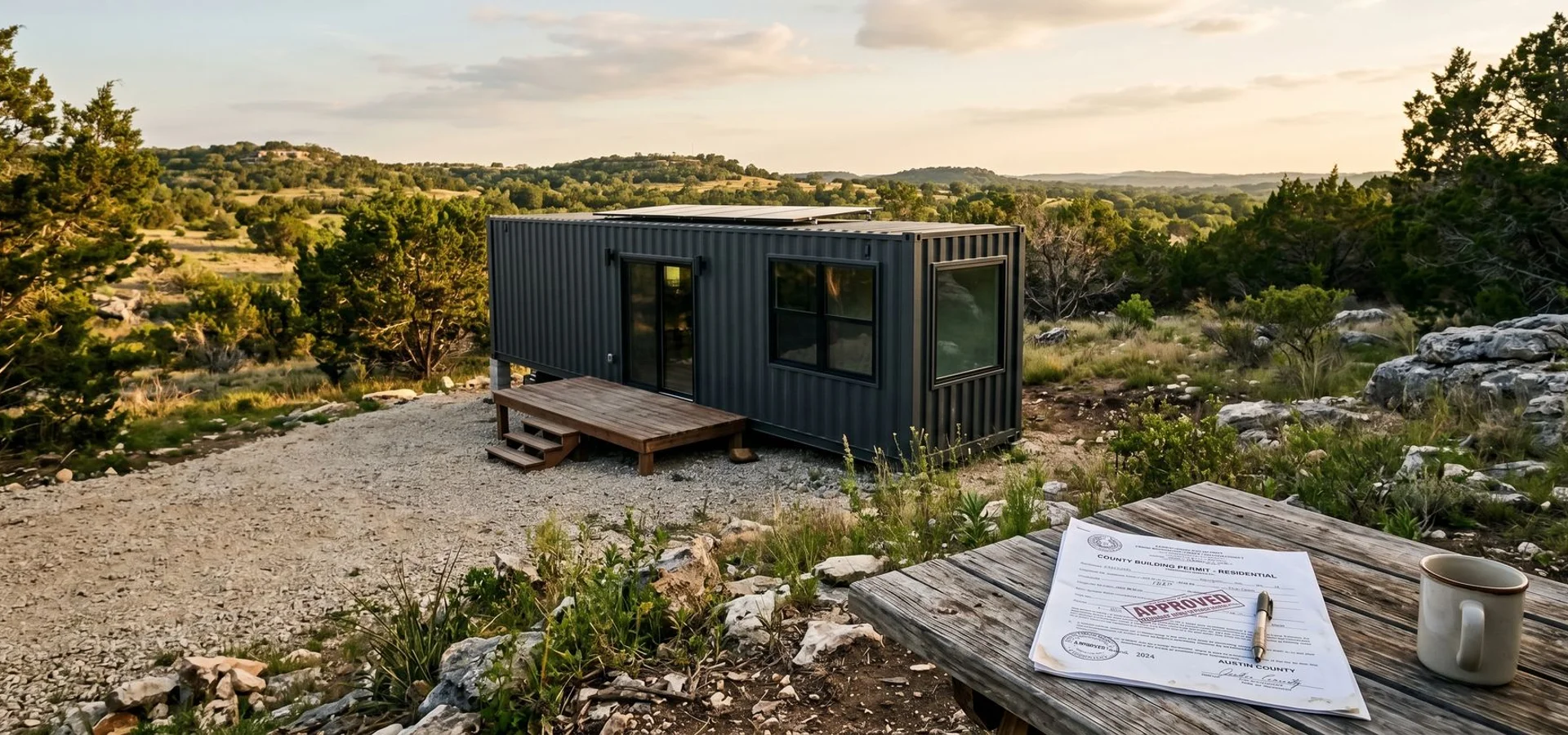
If you find yourself asking, are container homes legal in texas, the answer is a definitive yes. State authorities treat these structures as industrialized housing under the Texas Department of Licensing and Regulation (TDLR) guidelines.
Our team has seen how understanding local zoning rules is the dividing line between a rapid deployment and a stalled project.
At ATX CONTAINER HOMES, the primary mission is to provide premium modular construction solutions that prioritize long-term durability. This means your main challenge is not state approval, but rather satisfying the specific demands of your local county.
We will break down the three main regulatory layers you must satisfy and walk through the exact permit roadmap necessary for success.
Let’s look at the data and explore a few practical ways to respond to local building authorities. The state asks if the unit is built right, the county asks if it is placed right, and the HOA asks if it is allowed at all.
The Three Layers of Rules That Apply
Our experience shows that three distinct regulatory layers determine how you can build a container property. State codes, county permits, and private deed restrictions all play a role. You must satisfy all three levels before placing a unit on your land.
1. TDLR (state level, handled by the builder)
We monitor the Texas Department of Licensing and Regulation because they set the absolute baseline for construction quality. As of July 2024 and continuing through 2026, the state mandates that all industrialized housing adhere to the 2021 International Residential Code (IRC). Independent third-party inspections verify compliance during the build process.
Our manufacturing facility ensures every unit meets this rigorous standard before it ever leaves the shop. Every TDLR container home ships with a complete documentation packet. Local officials will ask for this specific paperwork at permit time.
2. County and City (jurisdiction-specific, varies by lot)
We know that local jurisdictions determine exactly where and how a structure sits on your property. This is where you encounter specific rules for setbacks, height limits, and foundation requirements. The real work involves matching your site plan to the unique accessory structure codes of your specific location.
Our clients have successfully placed units in Bexar, Comal, Guadalupe, and Kendall counties without facing outright bans. Here is a breakdown of specific county requirements.
- In unincorporated Bexar County, you must secure a Building Permit Authorization from Public Works before the Fire Marshal will issue a building permit.
- We closely follow the City of San Antonio rules, which allow Accessory Dwelling Units up to 800 square feet. The Development Services Department permits detached units as close as three feet from the property line.
- Comal County regulations focus heavily on septic compliance. Our rural customers must obtain an On-Site Sewage Facility permit designed by a registered sanitarian from the Comal County Engineer’s Office.
- Kendall County permit offices require only one set of architectural plans, compared to the two sets required in neighboring areas. Off-grid water and power setups often dictate the foundation and utility plan in these Hill Country ranchlands.
- We advise caution in Alamo Heights, Olmos Park, and Terrell Hills due to tight accessory structure ordinances. Height limits are extremely strict in these municipalities. You must plan for crane delivery on narrow lots.
3. HOA, Deed Restrictions, and Subdivision Bylaws (the surprise)
Our team finds that private neighborhood rules often catch buyers completely off guard. An HOA can prohibit non-traditional structures or ban metal exteriors even if your county permit office gives you the green light. Many rural Hill Country properties operate without an HOA.
We recommend making a phone call to the HOA management company before committing any funds. You should also take a quick read of the deed restriction filing at the county clerk’s office. Newer suburban subdivisions inside the metro area almost always enforce strict aesthetic guidelines.
What ATX Handles vs What You Handle
We split responsibilities clearly between the manufacturing team and your local site preparation contractors. A common source of confusion involves who actually submits the paperwork to the city. Texas law dictates that the property owner must pull the specific container home permit texas regulations require.
Our complete documentation packet gives you the exact engineering documents the county wants to see. Here is a clear breakdown of who is responsible for each step. The division of labor keeps the process moving quickly.
| Manufacturer Provisions | Property Owner Tasks |
|---|---|
| TDLR industrialized-housing certification | County or city building permit application |
| 2021 IRC-compliant construction | Engineered foundation plan stamped by a Texas PE |
| Wind and water-tight (WWT) certification | OSSF permit and installation |
| Engineered architectural drawings | Utility hookups (electric, water, propane) |
| Complete documentation packet | HOA approval and deed restriction confirmation |
We provide the mandatory documentation packet that your county expects. Texas law places the responsibility of pulling the permit directly on the property owner. This clear division keeps the installation timeline on track.
Container Home vs Stick-Built, Legal Treatment: Are Container Homes Legal in Texas?
We want to emphasize that Texas treats a TDLR-certified container home exactly the same as a traditional stick-built modular house. The structural classification depends entirely on code compliance rather than the building material. Local inspectors look for IRC compliance and an approved foundation system.
Our manufactured units meet these strict residential standards perfectly. The steel exterior is completely irrelevant to the legal status of the dwelling. A bare-shell shed conversion bolted together in a driveway will fail a permit inspection.
We ensure every build carries the permanent state label proving it meets rigorous codes. Professional engineering separates a legal residence from a simple storage box. Properly certified units provide peace of mind and long-term legal protection.
The Practical Path
We suggest checking your deed restrictions and calling the local permit office as your first steps. These two actions will tell you immediately if your specific lot qualifies for a modular build.
Following a simple process before spending any money is the smartest approach.
- Our primary advice is to pull your HOA bylaws from the county clerk to check for metal-exterior bans.
- Call your county building department next and ask if they accept TDLR-certified industrialized housing.
- Jurisdictions like Bexar, Comal, Guadalupe, and Kendall counties will generally say yes.
- Our staff can generate a quote and provide the documentation packet once both checks pass.
Simply contact us with the property address to discuss the container home zoning bexar county officials will enforce on your lot. A quick review helps avoid wasted time on incompatible land.
We will gladly tell you what is known about that jurisdiction.
Once you have answered the question of are container homes legal in texas for your lot, you can review the available inventory. See the pre-built container homes in San Antonio for current standard model pricing.